


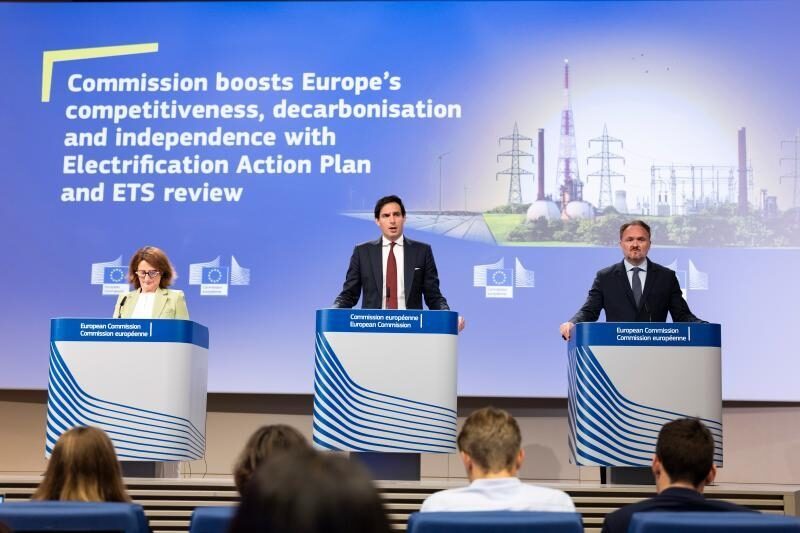
How can Europe electrify its economy in the fastest and most cost-effective way?
This is the central question addressed by the Electrification Action Plan, which sets a clear ambition: by 2040, electricity should account for 46% of the EU’s final energy consumption.
While this sets the tone, the main challenge for the Commission was translating this objective into concrete action across every sector.
Buildings are an obvious place to start. They account for around 40% of the EU’s energy consumption, with heating and cooling representing nearly 80% of buildings’ energy demand.
The Action Plan prioritises:
- Accelerating the deployment of heat pumps, increasing the installed base from 30 million today to 100 million by 2040.
- Improving the efficiency of how energy is produced, distributed and consumed within buildings.
One particularly positive signal is that the Commission places digital optimisation of heating systems alongside improvements to the building envelope as a key enabler of electrification in the sector.
Mainstreaming digital optimisation of heating systems just makes sense. Building on existing submetering infrastructure, digital optimisation solutions:
- require very limited upfront investment;
- deliver up to 30% energy savings immediately without requiring renovation;
- prepare buildings for low-temperature heating solutions such as heat pumps, district heating, geothermal, solar thermal (like the city of Ploufragan planned) and waste heat recovery.
The EU’s energy legislation already provides Member States with most of the tools needed to accelerate electrification until 2030. The priority should now be to implement the energy acquis that already exists.
We now look forward to the Cooling and Heating Action Plan to further operationalise the solutions enabling the decarbonisation of the sector.
Discover the benefits and real-world examples in our Digital Optimisation of Heating Systems case studies.
